A Two-Part Evening for a Long Film
A good pause follows the film’s own shape, not an arbitrary clock. Choose a natural hinge, make a note of the moment, and return without turning the second half into a recap.
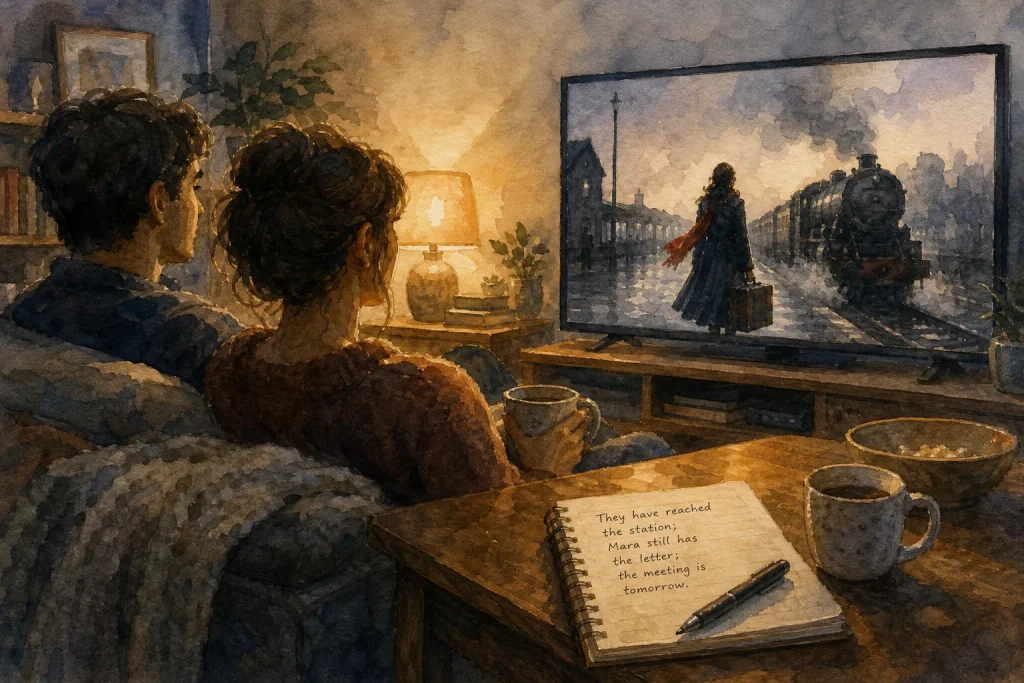
A long film is easier to split at a change in dramatic pressure than at an arbitrary time. The right pause lets you leave on a question, a decision or a shift in direction, then return with the story still active in your mind.
That does not mean you need to treat a film like homework. A two-part evening is simply a way to give a long work enough room without asking your attention to stretch past its natural limits. You can use the same plan across an evening, or carry the pause into the next day when the ending is too late or the household is ready to stop.
Choose The Evening
Before pressing play, decide what kind of viewing the film needs. A sprawling family saga, a historical epic and a slow-burn thriller place different demands on attention, but none comes with a mandatory schedule. The useful question is practical: when are you likely to be tired, interrupted or ready for bed?
If you are watching with someone else, agree on the stopping rule before the opening scene. One person may be happy to stop at a natural break; another may find any pause frustrating. Settling that in advance is kinder than debating it during a tense sequence.
Keep the plan flexible. You might aim to finish the first part in one sitting and resume the following evening, or take a substantial break between parts on the same night. A pause should protect the experience, not create a second appointment that feels burdensome.
Find A Story Hinge
Do not try to predict the perfect midpoint before you know the film. Instead, watch for a scene after which the story’s situation has meaningfully changed. A character may commit to a course of action, a group may reach a new place, or a hidden motive may alter how earlier scenes read.
These moments often provide a clean seam. The next scene may begin a new phase, even if the film does not announce a chapter break. Look for a change in objective, setting, allegiance or immediate danger rather than a particular kind of scene. A dramatic event is not automatically a good stopping point: a sudden interruption in the middle of a confrontation can leave the story feeling cut off rather than paused.
Credits are rarely necessary as a signal, and the film’s official intermission, if it has one, is not the only sensible option. Treat the pause like a bookmark in a novel: it belongs between thoughts, not halfway through one.
Use A Soft Window
Give yourself a loose stopping window instead of chasing an exact elapsed time. As the film approaches the point when you expect to pause, notice whether it is closing one movement and opening another. If the current scene is still developing, keep watching. If the story has just turned, pause after the scene has settled.
Some films offer a conspicuous hinge; others move by accumulation. In a quieter film, a character’s departure, a change of season or the arrival of a new relationship may mark a shift more clearly than a sharp plot twist. You are looking for a moment that feels complete enough to leave, while still making you curious about what follows.
Say you and a friend begin a long fictional drama after dinner, planning to stop before you become tired. The first major section ends with the protagonist accepting an offer that will take them away from home; you pause after the next scene establishes the new setting. That choice leaves the decision behind you and the consequences ahead, so the second sitting has a clear point of entry.
Make A Small Bookmark
Before you pause, record only what you need to re-enter the film. A short note can name the last scene, the active question and any detail you expect to matter soon. Avoid writing a full plot summary. Reconstructing the film in your own words can make the return feel like preparation for an exam.
For example, a note might read: “They have reached the station; Mara still has the letter; the meeting is tomorrow.” Those concrete details are more useful than a broad line such as “the conflict is getting worse”. If you are watching with someone, ask whether they want the note too, or whether a brief verbal reminder will suffice.
Also leave the film at a point you can find again. Save the playback position where your service allows it, or note the scene and a distinctive visual detail if you are watching from a disc. A visible landmark—a red scarf on a chair, a train pulling out—can be easier to locate than a timestamp.
Let The Pause Breathe
Once you stop, do something that gives your attention a genuine break. Make tea, wash up or step outside for a moment. If you are dividing the film across days, put the note somewhere you will see it and let the story sit without repeatedly checking how much remains.
Try not to replace the pause with a running discussion of every clue or interpretation. A little conversation can deepen a shared viewing, but an exhaustive recap may make the return feel mechanical. If you have a thought you do not want to lose, jot down one question rather than settling it before the film can answer.
If the household schedule changes, move the second part without guilt. There is no virtue in resuming when everyone is distracted. A pause that lasts longer than planned may call for a modest refresh, not a full restart: read your note, recall the last scene and let the film’s next image do the rest.
Return Without Rewinding
When you resume, give the film a quiet opening. Put away the phone, settle the room and read your bookmark. If the film begins with a new scene or a deliberate transition, allow it to orient you rather than immediately rewinding to the previous stopping point.
Rewind only if you stopped during a line, a movement or a sequence whose continuity matters. Otherwise, a long recap can flatten the effect of the edit. Film already supplies reminders through faces, objects, music and repeated settings; trust those cues to bring back the thread.
If you cannot remember a character’s name, use the note or a quick exchange with your companion, then keep going. The aim is not perfect recall. It is enough to remember what the characters want, what has changed and what question the film has left open.
When No Seam Appears
Some films resist a tidy division. They may sustain one continuous pursuit, build towards a single set-piece or depend on an uninterrupted performance. If every pause feels damaging, consider starting earlier, choosing another evening or accepting a longer first sitting. The format of the film matters more than the neatness of the plan.
If you must stop without a natural hinge, choose the least disruptive point available: after a scene, not in the middle of a shot or line. Make a note that the pause came during an ongoing sequence, then begin the next sitting with a brief rewind to its start. That small adjustment can restore the scene’s rhythm without replaying a large stretch.
When you can choose, though, follow the film’s own movement. A useful split does not divide the story into equal portions; it gives each sitting a shape, and lets the second begin with the consequences of the first still in view. You finish with the film’s ending, not with the feeling that you have spent the evening managing it.